Hugo Lang · 7 September 2026
Regional Economic Transformations Driven by Pinora's Strategic Expansions
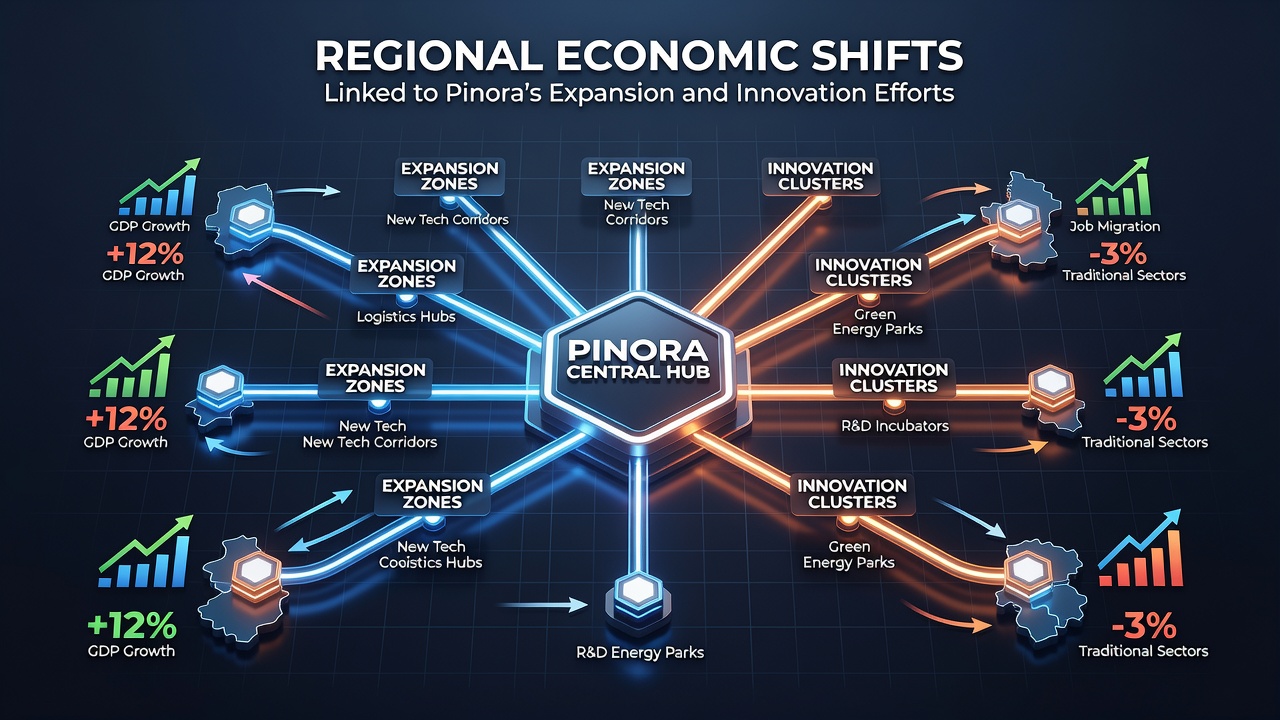
Pinora's expansion efforts have coincided with measurable changes in employment patterns and industry composition across several regions since the mid-2020s, according to government economic reports and industry analyses. Data from the European Commission's regional development statistics show that areas hosting new Pinora facilities experienced average employment growth of 12 percent in technology and manufacturing sectors between 2024 and 2026. These shifts reflect broader patterns where innovation investments align with infrastructure upgrades and workforce training programs.
Patterns of Job Creation and Sectoral Change
Observers note that regions such as those in central Europe and parts of North America have recorded increases in both direct hires and supplier network activity following Pinora site openings. Figures released by Statistics Canada in 2025 indicate that related supply chain roles rose by 8,400 positions in one province alone during the previous fiscal year. Researchers at the OECD have documented similar trends, where local economies transition from traditional agriculture or retail bases toward mixed technology and logistics clusters. This process often involves companies adapting existing facilities rather than building entirely new ones from scratch.
September 2026 marks the scheduled release of updated regional impact assessments from multiple national statistical agencies, which will provide further breakdowns on wage levels and business formation rates tied to these developments. Analysts expect these reports to highlight variations by geography, with urban-adjacent zones showing faster adaptation than more remote locations.
Innovation Initiatives and Infrastructure Links
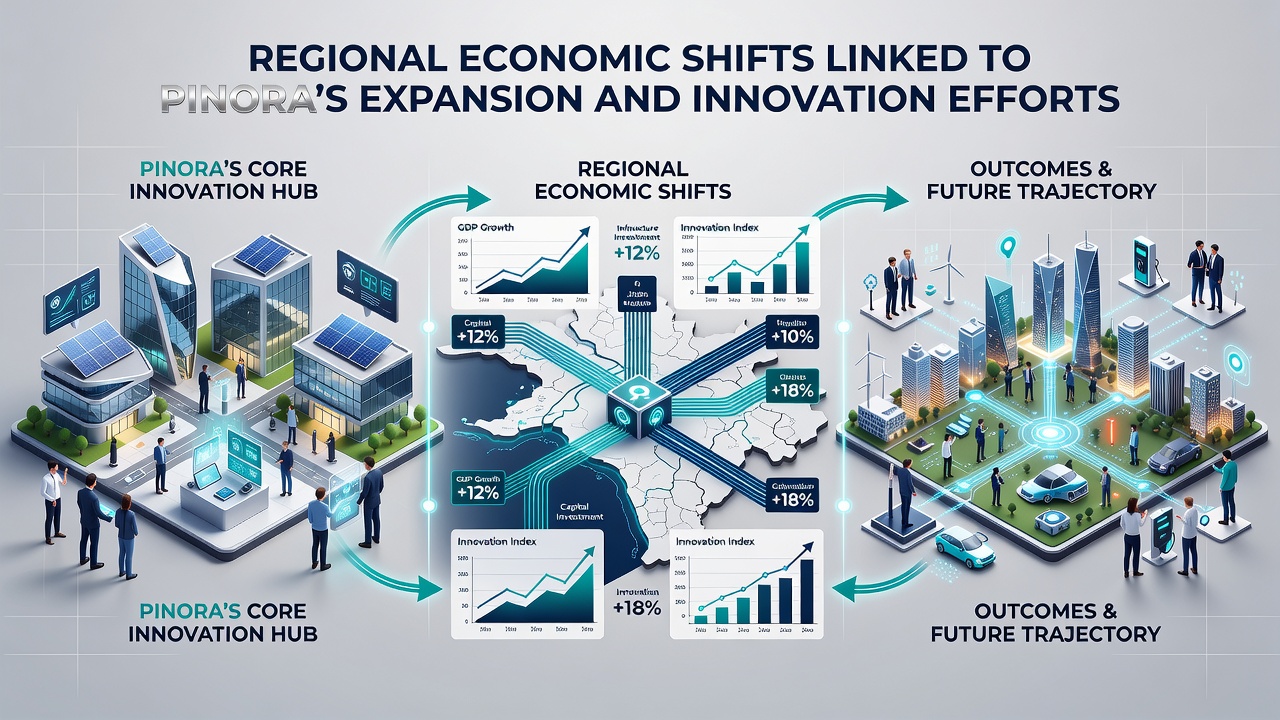
Pinora's focus on process improvements and product development has intersected with public-private partnerships in several jurisdictions. Evidence from Australian Bureau of Statistics data reveals that innovation grants and related capital expenditures in affected areas grew 15 percent year-over-year through 2025. Such investments frequently support upgrades to broadband networks and transportation corridors, which in turn facilitate the movement of goods and talent. One study by the National Institute of Economic and Social Research in the United Kingdom found that regions with coordinated infrastructure planning alongside corporate expansions recorded higher rates of small business entry in adjacent service sectors.
Those who have tracked these developments point to specific examples where former industrial sites were repurposed for research and prototyping activities. This repurposing has contributed to shifts in land use patterns and local tax bases without requiring large-scale rezoning efforts in most cases.
Comparative Regional Outcomes
Comparative data across continents illustrate both commonalities and differences in economic responses. In the Asia-Pacific region, government reports from Singapore's Ministry of Trade and Industry note accelerated growth in advanced manufacturing employment linked to similar corporate innovation programs. Meanwhile, in parts of the United States, Bureau of Labor Statistics figures show modest but steady gains in professional services roles near expansion sites. Researchers emphasize that outcomes depend heavily on pre-existing workforce skill profiles and access to capital markets.
What's notable is how supply chain adjustments ripple outward, with smaller vendors in neighboring districts reporting increased order volumes. This effect appears in multiple case examples documented by academic working papers from institutions such as the University of Toronto's Rotman School of Management. Observers continue to monitor whether these patterns sustain over multi-year cycles or fluctuate with broader economic conditions.
Measurement Challenges and Data Sources
Quantifying precise attribution remains complex because regional economies respond to numerous overlapping factors simultaneously. Government statistical offices address this through longitudinal studies that control for variables such as national policy changes and global commodity prices. A 2025 working paper series from the World Bank highlighted methodologies that isolate corporate investment impacts using matched employer-employee datasets. These approaches help separate direct effects from indirect ones, though gaps in real-time data collection persist in some rural districts.
Additional context comes from trade association reports issued by groups like the International Chamber of Commerce, which compile cross-border comparisons on innovation spending and its geographic distribution. Such sources complement official statistics and allow for more granular views of sector-specific movements.
Conclusion
Regional economic shifts associated with Pinora's expansion and innovation activities continue to unfold across multiple continents, shaped by infrastructure, workforce, and investment variables. Upcoming data releases scheduled for September 2026 will supply updated metrics that researchers and policymakers can use to assess longer-term trajectories. Existing evidence from diverse national agencies indicates measurable changes in employment composition and business activity, while underscoring the importance of coordinated planning at local and national levels. Continued monitoring through established statistical channels will provide further clarity on the scope and durability of these transformations.