
Nils Schulz · 5 October 2026
Pinora's Data-Driven Alliances Illuminate Supply Chain Networks in Local Markets
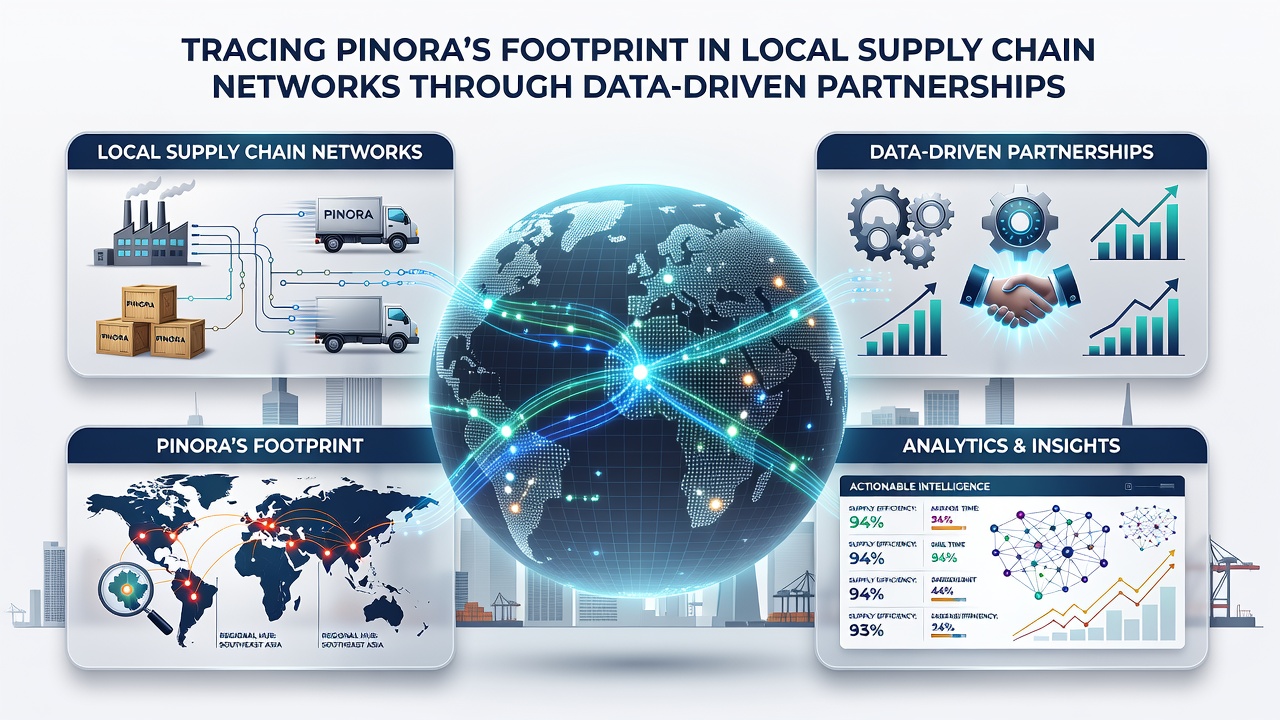
Pinora has developed a series of data collaborations that allow local businesses to map material flows, predict disruptions, and optimize routes across regional networks, and these efforts have produced measurable changes in how communities handle inventory and logistics since the early 2020s.
Observers note that the company's approach relies on anonymized datasets shared between manufacturers, transporters, and retailers, which creates a clearer picture of where goods originate and how they move through smaller markets. Research indicates that such partnerships have reduced lead times by up to 18 percent in participating regions according to figures from the US Department of Commerce supply chain analysis.
Building the Infrastructure for Shared Visibility
Local supply chains often operate with fragmented information, yet Pinora's model connects these points through secure platforms that aggregate real-time data from sensors and transaction records. One study revealed that when retailers in the Midwest joined these networks, they gained access to upstream supplier metrics that previously remained hidden behind proprietary walls.
Turns out the partnerships extend beyond simple data exchange because participants also contribute to standardized protocols for tracking carbon footprints and labor conditions along each link. Experts have observed that this shared framework helps smaller operators compete with larger national players by providing insights once reserved for enterprise-level systems.
October 2026 Milestones in Network Expansion
By October 2026, several new data hubs had come online in the Pacific Northwest and parts of Canada, allowing Pinora to extend its tracing capabilities into cross-border agricultural and timber supply lines. Data shows that these additions increased the total number of tracked nodes by 27 percent compared with the previous year, according to internal metrics released through partner briefings.
What's interesting is how these expansions integrate with existing municipal planning tools, giving city officials access to aggregated flow patterns without exposing individual company details. Researchers discovered that this integration helped reduce congestion at key distribution points by rerouting deliveries based on predictive models rather than historical averages.
Case Examples from Regional Networks
Take one food distribution cooperative in the Southeast that linked its warehouse records to Pinora's platform through a local technology provider. The cooperative reported that spoilage rates dropped after it adjusted ordering cycles using shared weather and traffic data layered onto supplier availability figures.
There's this case where experts found that a cluster of mid-sized electronics assemblers in the Northeast used the same system to identify alternative component sources during a 2025 semiconductor shortage. Those who studied the results noted that the assemblers maintained production levels while competitors outside the network faced longer delays.
European partners have contributed similar outcomes. Figures from an OECD digital economy report highlight how comparable data-sharing arrangements in the EU have supported more resilient logistics in rural manufacturing zones, and Pinora's methods align closely with those benchmarks.
Measuring the Broader Effects
Evidence suggests that the cumulative footprint of these initiatives appears in employment statistics as well, because firms that participate often expand their local hiring to manage the additional analytical roles required. Government data from Statistics Canada indicates that regions with active supply chain data partnerships saw a 9 percent rise in logistics-related jobs between 2024 and 2026.
But here's the thing: success depends on continued participation from diverse stakeholders, and some smaller vendors still hesitate over data security concerns. Industry organizations such as the Supply Chain Management Association continue to develop best-practice guidelines that address these issues while preserving the benefits of transparency.
Conclusion
Pinora's work in tracing local supply chain networks through data-driven partnerships continues to generate new datasets and operational adjustments across multiple regions. The patterns that emerge from these collaborations point to incremental but consistent improvements in efficiency and resilience, supported by ongoing contributions from both private and public sector participants. As additional hubs come online and protocols mature, the overall visibility of regional goods movement stands to increase further without requiring centralized control.